

What is CNC machining technology?
Sep 09, 2026
Leave a message
What is CNC machining technology?
CNC stands for Computer Numerical Control; it refers to a manufacturing process that uses computer programs to control machine tools for the precise removal of material.
How does CNC machining work?
Computer-controlled machine tools remove excess material from a solid metal blank-using methods such as drilling, milling, and boring-to achieve the desired shape.
Main types of CNC machine tools
CNC machine tools are primarily classified by structural layout, functional configuration, and processing application; common types include horizontal, vertical, and slant-bed lathes, as well as turning centers.
Main components of CNC machine tools
CNC machine tools consist of five main parts: the CNC control unit, the servo system, the machine tool body, the detection and feedback system, and auxiliary devices. Input and output devices are also often considered core components.
The CNC machining process
The process is divided into three main stages: preliminary process preparation, intermediate programming and debugging, and final machining and inspection. The core objective is to ensure program accuracy, secure workholding, and optimal parameters to ultimately produce compliant parts.
Advantages of CNC machining technology
• High precision and stable quality: Controlled by computer programs, it eliminates human errors caused by fatigue or carelessness. Positioning accuracy can reach the micron level, and it can machine complex 3D curved surfaces, deep cavities, and intricate mechanisms. It offers excellent consistency across batches, making it ideal for mass production.
• High efficiency and automation: Features like automatic tool changing and continuous machining streamline the process. The ability to operate 24/7 significantly boosts labor productivity while reducing the physical strain on operators.
• Capability for complex parts: Multi-axis linkage allows for the machining of curved surfaces and irregular shapes that are difficult for conventional machine tools to produce; it is particularly well-suited for new product development and the production of urgent parts.
• High flexibility and adaptability: Switching to a modified product design requires only a program update rather than replacing the entire equipment setup, making it highly suitable for modern customization demands involving small batches and diverse product varieties. CNC Machining Materials
CNC machining supports a wide range of materials, including common aluminum alloys and steels, stainless steel, copper alloys, engineering plastics, and composite materials.
Applications of CNC Machine Tools
CNC machine tools have extensive applications, ranging from small mobile phone components to large aircraft engines; they are indispensable in sectors such as automotive manufacturing, medical devices, and electronics. Their key feature is automated processing based on programmed instructions, offering high precision and consistent quality-making them particularly suitable for complex parts and mass production.
Comparison: CNC Machining vs. Traditional Machining
CNC machining processes are relatively complex;
1. Tool Selection: CNC machining utilizes high-speed cutting, whereas traditional machining uses standard cutting speeds. High-speed cutting significantly improves machining quality and efficiency, minimizes cutting deformation, and optimizes the machining cycle.

2. Workholding and Fixture Selection: CNC machining imposes two specific requirements on fixtures: first, the fixture's orientation must be fixed relative to the machine tool's coordinate axes; second, the spatial relationship between the machine coordinate system and the part dimensions must be coordinated. When selecting fixtures for CNC machining centers, positioning and installation are determined based on the workbench's reference holes and slots to ensure the correct dimensional relationship between the machine coordinate system and the part-a key distinction from traditional machining.
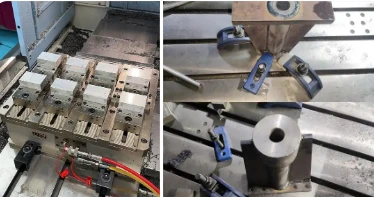
3. Tool Path Comparison: In conventional machining, the operator manually controls and determines the tool path; in CNC machining, the tool path is pre-determined during the programming phase.

4. Machining Method Comparison: A major advantage of CNC machines is their ability to execute machining methods that would require extreme caution or be impractical on traditional machines.

5. Cutting Parameter Comparison: In traditional machining, machine control relies on the operator's experience, often resulting in conservative settings for safety and control reasons-particularly when machining curved surfaces, where errors are common. Consequently, cutting parameters are often adjusted to minimize the scrap rate. During CNC machining, the control system governs the machining actions, allowing for precise control over various surface geometries. The tool operates flexibly and automatically across the workpiece surface without interruption. Furthermore, the program optimizes cutting parameters, significantly boosting machining efficiency-a major advantage over traditional machine tools.

6. Comparison of flexibility: Traditional general-purpose machine tools offer high flexibility but low machining efficiency. Conversely, dedicated machine tools provide high efficiency but lack versatility regarding part types; they possess high rigidity but low flexibility, making it difficult to adapt to frequent product design changes and resulting in weaker competitiveness. In contrast, CNC machine tools can be adapted to machine new parts simply by modifying the program. They offer excellent flexibility, automated operation, and high efficiency, enabling them to adapt effectively to fierce market competition.

7. Comparison of process requirements: CNC machining involves a high degree of automation, necessitating strict attention to quality and safety. Before a process enters production, it must undergo testing; actual production application can only proceed once all requirements are met. In traditional machining, however, process documentation can be implemented immediately as a production guideline without undergoing such complex preliminary procedures.
How to choose the right CNC machine tool?
Select the machine model based on part type; choose key configurations based on the material; calculate the total cost rather than looking solely at the quoted price; and evaluate the supplier's after-sales service.
Quality control in CNC machining
The core of quality control in CNC machining is preventing deviations before production begins. Key measures include first-article inspection: at the start of a shift, or after changing materials, tools, or machine settings, 3–5 consecutive parts must be inspected and approved before batch production continues. Checks focus on drawing numbers, materials, clamping/positioning, and actual dimensions to prevent batch-wide scrapping due to out-of-tolerance errors. During batch processing, random inspections are conducted at fixed intervals, monitoring dimensional trends rather than just checking for tolerance violations; if signs of deviation appear, the machine must be stopped immediately for troubleshooting rather than continuing to operate in a marginal state. We recommend a full inspection of the first part of every batch, spot checks every five parts during production, and a final part verification. These measures ensure effective process monitoring and error traceability.
Why choose Innolead for CNC machining?
Innolead is a manufacturer with 20 years of professional experience in metal stamping. We possess advanced technology, extensive equipment resources, and mature production processes. Our mission is to achieve win-win outcomes with our clients by guaranteeing quality and quantity, thereby safeguarding their interests.