

What are the common heat sink problems in a solar panel?
Oct 24, 2025
Leave a message
As a heat sink supplier, I've witnessed firsthand the crucial role these components play in solar panel systems. Heat sinks are designed to dissipate excess heat, ensuring the efficient operation and longevity of solar panels. However, like any technology, they are not without their challenges. In this blog post, I'll explore some of the common heat sink problems in solar panels and discuss potential solutions.
Thermal Resistance Issues
One of the most prevalent problems with heat sinks in solar panels is high thermal resistance. Thermal resistance refers to the ability of a material to resist the flow of heat. When a heat sink has high thermal resistance, it becomes less effective at transferring heat away from the solar panel. This can lead to overheating, which in turn can reduce the efficiency of the solar panel and shorten its lifespan.
There are several factors that can contribute to high thermal resistance in heat sinks. One common cause is poor contact between the heat sink and the solar panel. If the heat sink is not properly attached or if there is a layer of air or debris between the two surfaces, it can impede the transfer of heat. Another factor is the material used in the heat sink. Some materials, such as aluminum, have lower thermal conductivity than others, such as copper. Using a heat sink made of a material with low thermal conductivity can increase thermal resistance and reduce the effectiveness of the heat sink.
To address thermal resistance issues, it's important to ensure proper installation of the heat sink. This includes cleaning the surfaces of the heat sink and the solar panel to remove any dirt or debris, applying a thermal interface material to improve contact between the two surfaces, and using appropriate mounting hardware to secure the heat sink in place. Additionally, choosing a heat sink made of a material with high thermal conductivity, such as Rectangle Copper Heat Sink for CPU Cooler, can help to reduce thermal resistance and improve heat transfer.
Corrosion and Oxidation
Another common problem with heat sinks in solar panels is corrosion and oxidation. Solar panels are often exposed to harsh environmental conditions, including moisture, salt, and UV radiation. Over time, these conditions can cause the heat sink to corrode or oxidize, which can reduce its effectiveness at dissipating heat.
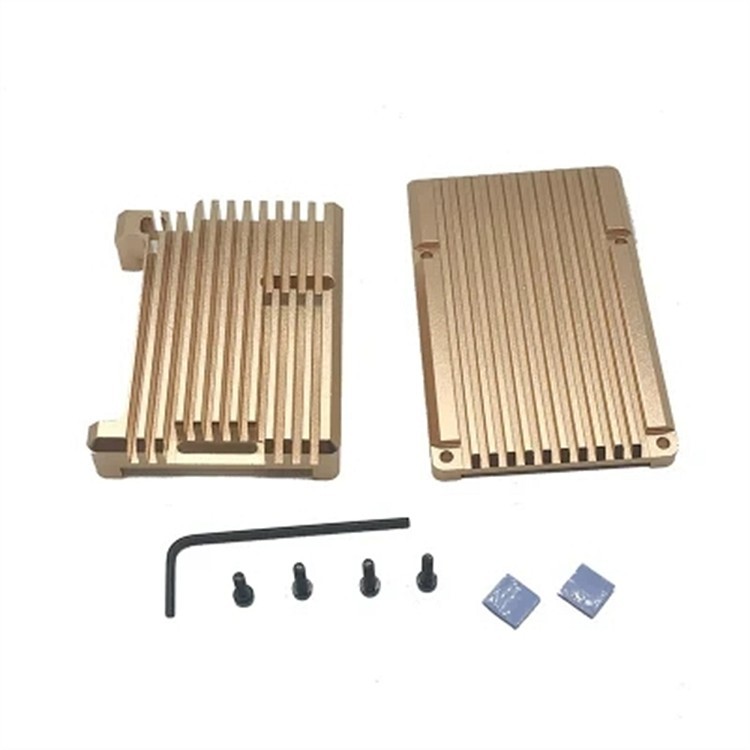

Corrosion and oxidation can occur on the surface of the heat sink or within the material itself. When corrosion occurs on the surface, it can create a layer of rust or oxide that can impede the transfer of heat. When corrosion occurs within the material, it can weaken the structure of the heat sink and cause it to fail.
To prevent corrosion and oxidation, it's important to choose a heat sink made of a material that is resistant to these processes. Stainless steel and aluminum are two materials that are commonly used in heat sinks because they are relatively resistant to corrosion. Additionally, applying a protective coating to the heat sink can help to prevent corrosion and oxidation. This can include a layer of paint, powder coating, or anodizing.
Dust and Debris Accumulation
Dust and debris accumulation is another common problem with heat sinks in solar panels. Over time, dust, dirt, and other debris can accumulate on the surface of the heat sink, blocking the flow of air and reducing its effectiveness at dissipating heat. This can lead to overheating and reduced efficiency of the solar panel.
To prevent dust and debris accumulation, it's important to keep the heat sink clean. This can be done by regularly wiping the surface of the heat sink with a soft cloth or using a compressed air canister to blow away any dust or debris. Additionally, installing a dust filter on the air intake of the solar panel system can help to prevent dust and debris from entering the system and accumulating on the heat sink.
Insufficient Cooling Capacity
In some cases, the heat sink may not have sufficient cooling capacity to dissipate the heat generated by the solar panel. This can occur if the heat sink is too small for the solar panel or if the solar panel is operating at a higher temperature than expected. When the heat sink has insufficient cooling capacity, it can lead to overheating and reduced efficiency of the solar panel.
To ensure that the heat sink has sufficient cooling capacity, it's important to choose a heat sink that is appropriate for the size and power output of the solar panel. This can be determined by calculating the heat dissipation requirements of the solar panel and selecting a heat sink with a cooling capacity that meets or exceeds these requirements. Additionally, using multiple heat sinks or a combination of heat sinks and fans can help to increase the cooling capacity of the system.
Conclusion
Heat sinks play a critical role in the efficient operation and longevity of solar panels. However, they are not without their challenges. Common problems with heat sinks in solar panels include thermal resistance issues, corrosion and oxidation, dust and debris accumulation, and insufficient cooling capacity. By understanding these problems and taking appropriate measures to address them, it's possible to ensure that the heat sink performs effectively and helps to maintain the optimal performance of the solar panel system.
If you're experiencing any of these problems with your solar panel heat sinks or if you're looking for high-quality heat sinks for your solar panel system, I encourage you to contact us. As a leading heat sink supplier, we offer a wide range of heat sinks, including Raspberry Pi 4 Kit Case with Fan with Cooiling Fan and Heat Sink and Heat Sink Cooling LED Lighting Systems, that are designed to meet the specific needs of solar panel applications. Our team of experts can help you select the right heat sink for your system and provide you with the support and guidance you need to ensure its proper installation and operation. Contact us today to learn more about our products and services and to discuss your heat sink requirements.
References
- Incropera, F. P., & DeWitt, D. P. (2002). Fundamentals of heat and mass transfer. John Wiley & Sons.
- Holman, J. P. (2002). Heat transfer. McGraw-Hill.
- ASHRAE Handbook: Fundamentals. (2005). American Society of Heating, Refrigerating and Air-Conditioning Engineers.